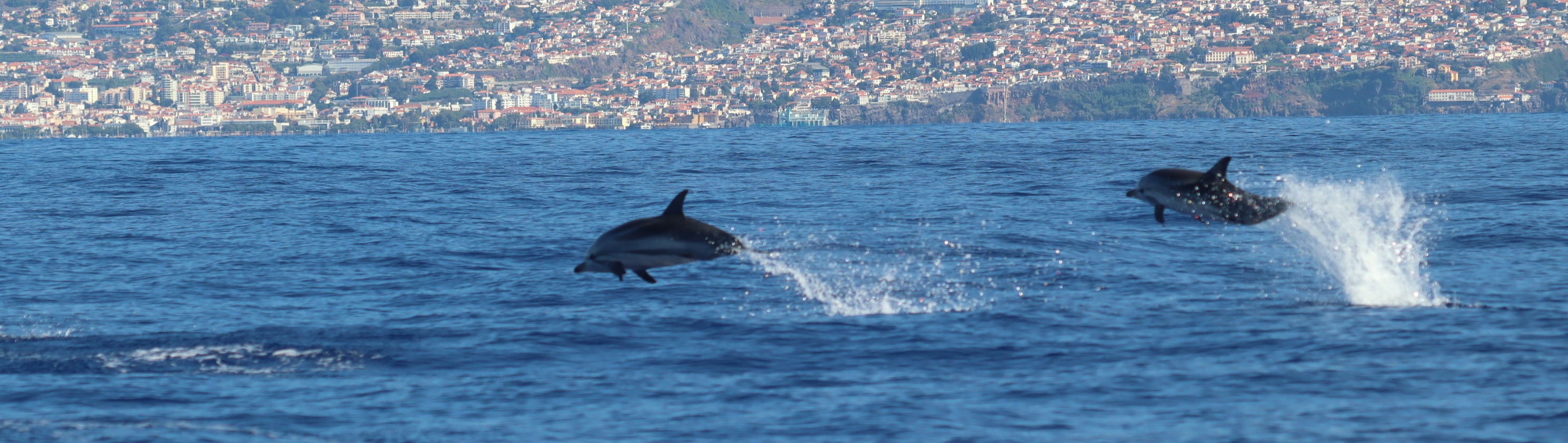
Madeira Cetacean Field Operations
Learning the Ocean Through Field Reality
Madeira, Portugal | 2021 | 6 Months | 20+ Boat-Based Expeditions
Madeira is an archipelago where the ocean feels vast, unpredictable and continuous. During six months working on cetacean research from this Atlantic outpost, I developed a deeper understanding of what marine field science truly requires — patience, resilience and the ability to work with uncertainty as a constant condition rather than an exception.
Over more than twenty boat-based expeditions, I contributed to cetacean monitoring through photo-identification surveys, collecting over 50 individual records. In theory, photo-ID is a simple method: capture distinctive markings on fins or flukes to identify individuals. In practice, it is a discipline shaped by the sea itself. Light conditions shift constantly, animals surface without warning, and every observation window is brief and unpredictable. Success depends on anticipation, focus and persistence rather than control.
A key part of this work was learning to read cetacean behaviour in real time. Understanding movement patterns, group dynamics and surfacing sequences became essential to anticipate their next actions and position the boat effectively for observation and data collection. This ability to interpret behaviour in changing conditions added a dynamic, almost predictive dimension to fieldwork, where observation and decision-making happen simultaneously.
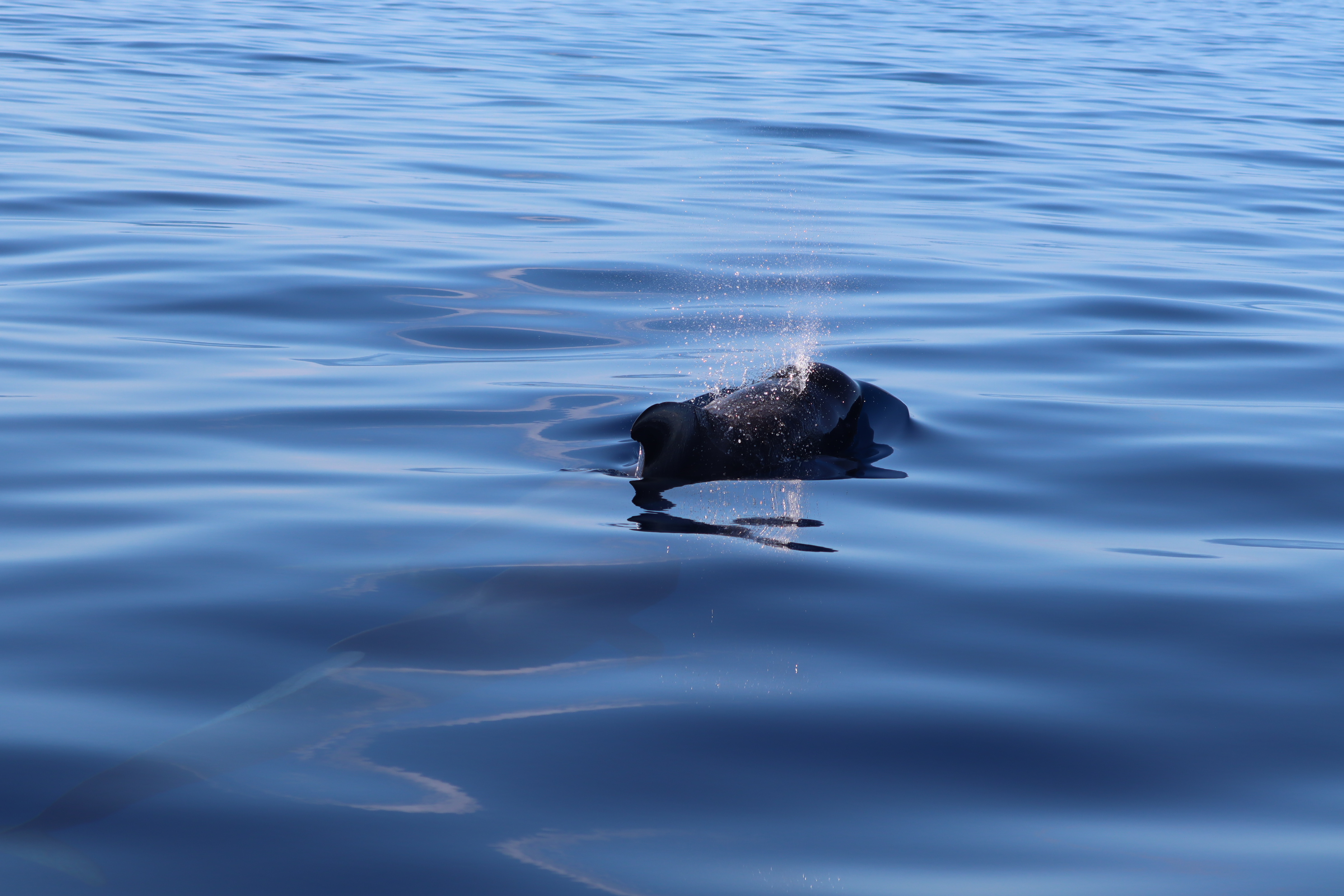
Beyond cetacean monitoring, I supported a range of marine research activities, including biological sampling campaigns and the maintenance of microalgae cultures for marine biotechnology projects. This required working across both field and laboratory environments, ensuring continuity between sample collection, processing and experimental systems. Operating equipment such as sonar, echo sounders, pumps and incubators became part of a broader responsibility: maintaining scientific operations in a dynamic and often demanding environment.
What defined my time in Madeira was not a single project, but the accumulation of operational experience across many. The combination of research intensity, logistical complexity and environmental variability revealed the reality of expedition science — a discipline where planning, coordination and adaptability are as important as the scientific questions themselves.
It was also during this period that my perspective shifted. Working continuously in open-ocean conditions, supporting multiple research streams and seeing how data is actually generated in the field changed the way I understand marine science. It is not only about observation or analysis, but about building systems that allow science to happen under real-world constraints.
These six months became a turning point in how I approach marine fieldwork — grounding scientific curiosity in operational awareness and a deeper respect for the conditions that shape every dataset collected at sea.
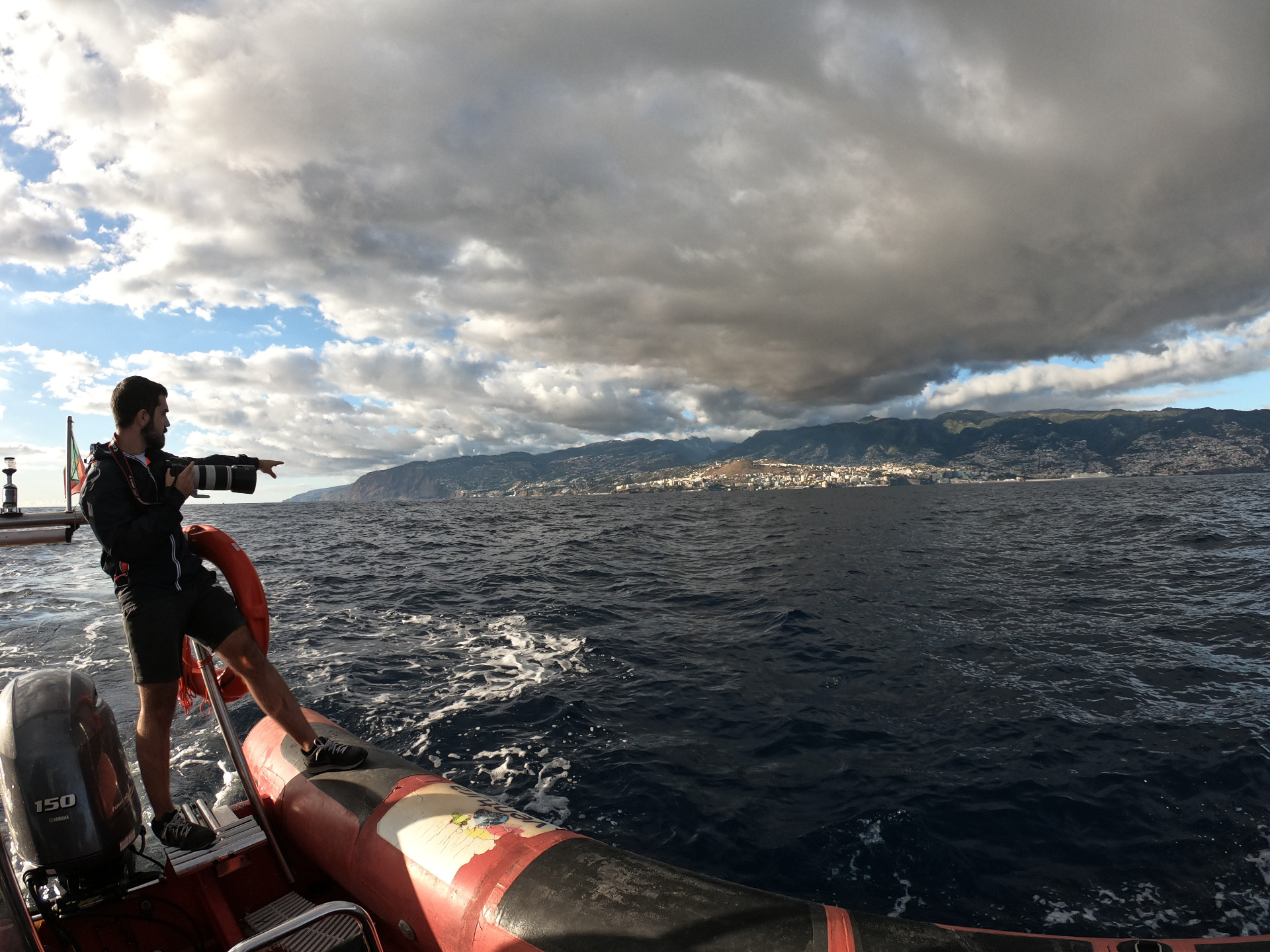
Highlights
- 6-month cetacean field research programme in Madeira (Atlantic Ocean).
- 20+ boat-based marine expeditions in variable offshore conditions.
- 50+ photo-identification records of cetaceans collected.
- Real-time behavioural observation and movement pattern interpretation of cetaceans.
- Support for marine biotechnology workflows, including biological sampling and microalgae culture maintenance.
- Operation of field and laboratory equipment (sonar, echo sounders, pumps, incubators).
- Coordination between field data collection, lab processing and scientific reporting.
- Exposure to integrated, multi-project marine research operations in offshore environments.
Key Lessons
- Fieldwork is driven by behaviour, not plans — In cetacean research, success depends on adapting to animal movement patterns and environmental conditions rather than fixed operational plans.
- Reading behaviour is part of data collection — Understanding cetacean surfacing patterns, group structure and movement dynamics is essential to positioning, timing and successful observation.
- The ocean introduces constant uncertainty — Conditions change rapidly at sea, making anticipation and situational awareness as important as technical execution.
- Marine research is an integrated system — Field observation, sampling, laboratory work and equipment operation are interconnected and must function as a continuous workflow.
- Experience builds predictive awareness — Repeated exposure to offshore conditions develops the ability to anticipate changes in both animal behaviour and operational constraints.